

Interview with Alice (shop owner) by Lindsey from Wessex Rivers Trust
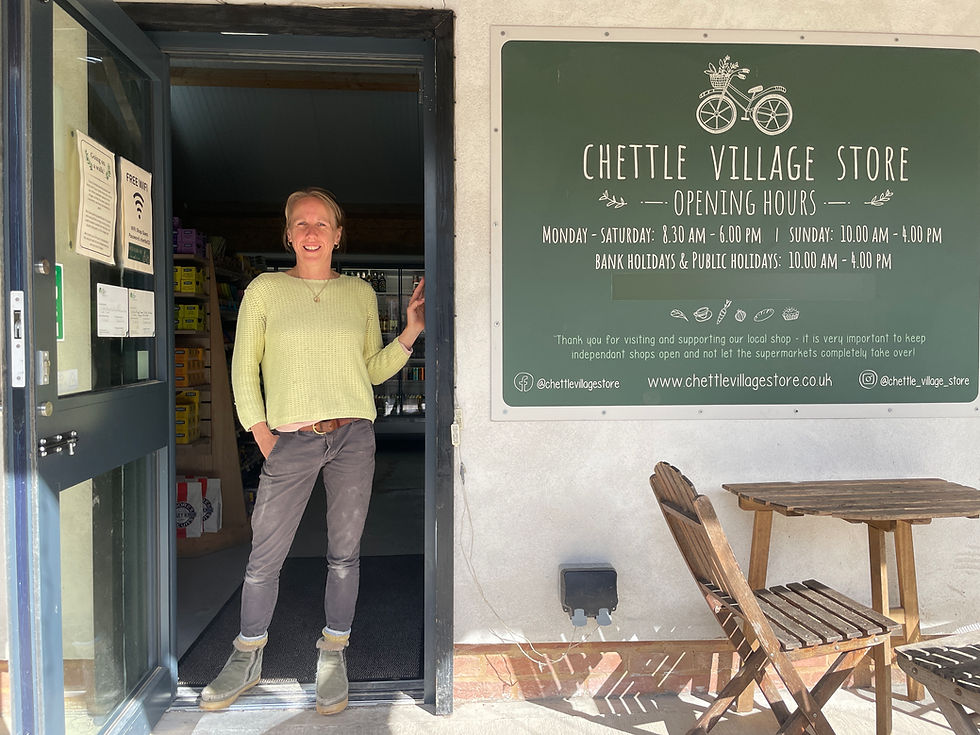
I did an interview with Lindsey Death for an article she wrote in Wessex Rivers Trust. Only snippets were used so I thought I would post the full 12 questions and my answers.
It gives you a bit of an insight into how and why we make decisions on what to stock, what the future holds, where we have been on the journey over the last 10 years and one of my issues with some refill products.
Chettle Village Store has had a lot of change and growth in the last few years, can you tell me more about how you got to where you
are now?
It has! It has been an amazing few years, not without it’s challenges but generally it’s been really positive. I started overseeing the shop in 2013 (before I took over the estate after my mother died in 2017) and employed Xanthe, a mum who had been homeschooling her young sons whilst slow travelling the world. She came with a love of organic, real food and a fair amount of knowledge on alternative health. She was the beginning of what Chettle shop is today. Before Xanthe we just sold basic staple foods – tinned beans, bacon, cheese, eggs, milk, sweets, crisps etc, you know the standard corner shop fare. It was useful for random top ups but you were never going to be able to make a healthy meal from it. The shop was also making a substantial annual loss but the estate covered this because my mother (who owned and ran the estate from 1967-2017) wanted to keep the shop open - she knew how important a shop is to keep a village alive, it means people walk around and therefore bump into each other and chat - that is how you have connection with your neighbours.
Fast forward 12 years and people have given up their supermarket shops and now do their entire weekly shop with us. We are selling local, organic fruit and veg, local meat and cheese, local booze, refills and local, ethical gifts and day boat caught local fish on a Friday lunchtime – plus all the national and branded staples and even random stationery.
I am so excited by the future of this shop.
How would you categorize or describe the shop, and what’s the ethos behind it?
A mini-supermarket in North Dorset that actually stands for something, specialising in local, organic, ethical food, drink and household staples.
I’m interested particularly in the refill section and the eco personal care and cleaning products you sell. How important is this part of the shop?
This is very important to me and the shops ethos. Most of the houses have septic tanks and the key to a healthy, happy, functioning septic tank is very similar to your own gut, if it is fed chemicals then the happy bacteria are killed and they can’t eat the poo and break down the waste. If you read the back of household cleaning products it’s scary what they say, most have the sign that shows the product is ‘harmful to aquatic life’, if it’s harmful to fish then you definitely shouldn’t be washing your dishes in it, or your clothes! And this is the same for personal care, why would you put a harmful, chemical filled product on your skin or in your mouth, which is then washed down the drains (and eventually into the rivers and seas) when you shower.
And the food refill section… We are having a bit of a re-think on this as the packaging that the food comes in is thick plastic, so basically the same as buying a new packet. At least with the refills on the household cleaning and personal care side, the giant bottles can be sent back to Bio D for refilling. I think I will speak to some of the other amazing refills shops I know and see what I can learn from them.
Every day is a school day, specially in current times where greenwashing is rife and so much is changing.
What is the main driver behind you offering refills?
It seems crazy that we buy so many products in either non-recyclable plastic or plastic that we know can only be recycled 5 times. The other thing I have been thinking about a lot is swapping refill liquids for refill dissolvable sheets, the extra fuel and shipping space needed to carry the water element round is huge, imagine a truck load of dissolvable sheets vs a truck load of cleaning spray in bottles, the volume and weight difference would be huge.
How do you decide which suppliers to stock? Is there a big difference in cost/eco and ethical credentials?
This is something we haven’t perfected yet, we have no standard procurement method. But this is something we would like to perfect in 2026. What trumps what when making a decision on what to stock?! We always try to hold one affordable product and one ethical product so that everyone has a choice. I don’t want to become an evangelical, high end shop that scares customers away, everyone is on a journey and I want to be able to cater for all parts of that journey…
What do you think the main barriers are to more people making eco-friendly consumer choices?
There are so many…. Budget, availability, knowledge of different products and how to use something ethical and an ability to see past the greenwashing. But on top of this there is also branding and marketing, big named brands have persuaded consumers that they NEED their product, and they have the money and power to do this. A small, independent ethical brand simply can’t compete with this.
Have you seen any changes in the consumer behaviour within your own community since having the village store? Any examples of people who have changed their habits due to having the shop?
YES! We did a survey back in 2024 with a university who was looking at the social return on investment of private landlords (ie estate owners who owned several houses in one area), we made a survey for the local residents and our regular shop customers about how their buying has changed since living in Chettle or shopping at the shop, and pretty much everyone had made significant changes to their shopping and eating habits.
Do your customers’ personal requests influence what you sell?
Yes very much so. No point selling what people don’t want. We encourage customer input. We would like more to share more info but there just isn’t enough hours in the day to do all the tasks and exploratory work we’d like to….
What is the most rewarding part of being involved in this work?
Knowing that you are making a difference to people’s gut health! Even though I don’t need to, I love working behind the tills and speaking to customers. I am obsessed with food, farming, nature, the environment and the food system in general. Even in my time off I listen to podcasts and read books about the subject.
What are the biggest challenges facing your business?
Making any profit!! God it’s hard out there at the moment. Margins are so tight. I wonder on a daily basis why I am doing this? All this effort for no wage and no profit. Am I just being a busy fool? But I just can't not do it. I am obsessed with the food and farming industry and want to try and help peopel understand the importance on real food - on their health and the health of nature, which in turn again affects their health.
Shopping at the Chettle Village Store is an experience with the opportunity to get pies/coffee/ice cream, sit on sofas, browse secondhand clothes, pop down the road to the community built playpark. How important has it been to make the location a destination worth visiting?
I never made it a destination purposefully, I didn’t think to myself ‘let’s create a playpark so people use it and then use the shop’ or ‘let’s create a second hand shop as this will bring in more customers’, in Chettle things just evolve!! Opportunities present themselves and I cobble something together and if it works we stick with it.
What’s next for Chettle community/village store, anything exciting on the horizon that you can tell us about?
Urrrr… So much and nothing. Like I said everything is changing depending on sales, customers, buying trends etc. I can see a real rise in buying real food (some great stats just came from Riverford and their sales of organic food) so I think we will be reducing some sections to make space for more veg, more bread and more meat.


Comments